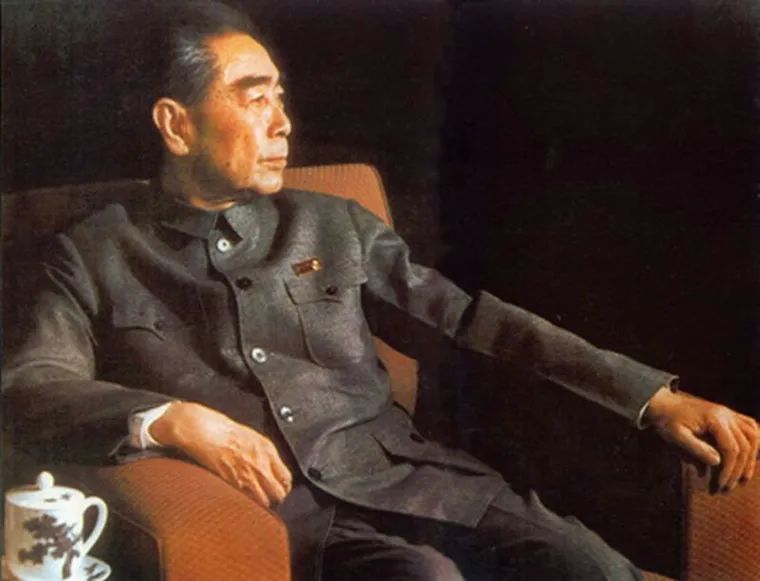
Today marks the 50th anniversary of the death of Zhou Enlai (Chinese: 周恩来), a key figure in the Chinese Revolution and Chinese foreign policy. Zhou Enlai was both a close comrade of Mao Zedong and one of the first core members of the CPC. He laid the foundations of Chinese diplomacy and played a crucial role in the recognition of the People’s Republic of China (PRC). Known as the “people’s good prime minister” for his unwavering dedication, strict self-discipline, and concern for the people, Zhou Enlai’s extraordinary achievements, noble character, and brilliant personality are deeply remembered in the hearts of people from all ethnic groups across the country, and he enjoys a high reputation internationally.
Who is Zhou Enlai?
He served as the Premier of the Government Administrative Council of the People’s Republic of China (replaced by the State Council from September 1954) and as Minister of Foreign Affairs before 1958; he subsequently held positions such as Vice Chairman of the Central Committee of the Communist Party of China (CPC), Vice Chairman of the Central Military Commission, Vice Chairman and later Chairman of the Chinese People’s Political Consultative Conference (CPPCC).
Born on March 5, 1898, in Huaian, Jiangsu Province, China, Zhou Enlai was a founder of Chinese diplomacy and a leading figure in Chinese practical foreign policy. In 1917, he graduated from Nankai School in Tianjin and subsequently studied in Japan and France. He joined the CPC in 1921 and served as the European secretary of the Chinese Socialist Youth League in 1922, becoming the CPC’s leader in Europe. Zhou returned to China in 1924 and served as the director of the Political Department at the Whampoa Military Academy in Guangdong. Following the collapse of the First United Front between the CPC and the Guomindang (Chinese Nationalist Party) in 1927, he led the Shanghai Workers’ Armed Uprising and the Nanchang Uprising, respectively.
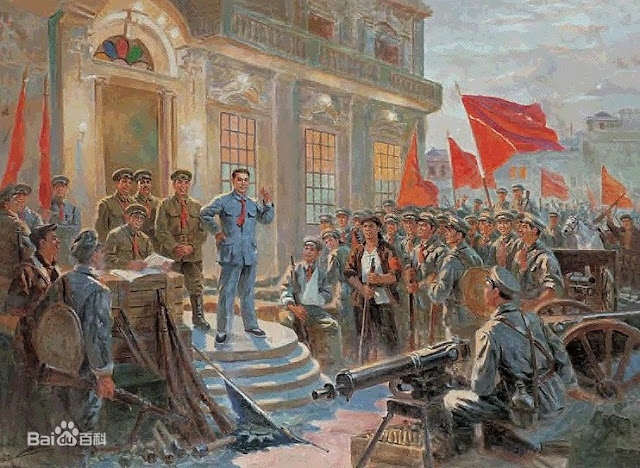
At the First Plenary Session of the Sixth CPC Central Committee in 1928, he was elected a member of the Political Bureau of the CPC Central Committee. At the end of 1931, he joined the CPC Central Revolutionary Base, encompassing Jiangxi and Fujian provinces, and served successively as Secretary of the CPC Soviet Area Central Committee and Vice-Chairman of the CPC Central Committee Revolutionary Military Commission. In 1934, he participated in the Red Army’s Long March and supported Mao Zedong’s sound proposals at the Zunyi Conference in January 1935. During the Xi’an Incident of 1936, as the authorized representative of the CPC Central Committee, he negotiated with Chiang Kai-shek and pressured him to accept the CPC’s proposal to fight against Japanese aggression. During the Second Sino-Japanese War, he headed the affairs of the CPC Yangtze Bureau and the Southern Bureau respectively, represented the CPC in the Guomindang’s sphere of power to work for a united front, and launched a campaign to secure broad support for the CPC from international figures. At the First Plenary Session of the Seventh CPC Central Committee, he was elected a member of the CPC Central Committee Political Bureau and party secretary. Following China’s victory in the war against Japan, he led the CPC delegation to negotiate with the Guomindang. After Chiang Kai-shek launched a full-scale civil war, he assisted Mao Zedong in organizing and commanding the Chinese Revolution to complete victory.
He was the first person in charge of the PRC’s foreign affairs
Before the founding of the People’s Republic of China (PRC), he served as one of the main leaders of the Communist Party of China responsible for foreign relations. He spearheaded the drafting of the Joint Programme of the Chinese People’s Political Consultative Assembly, which for the first time set out the basic principles of the PRC’s foreign relations in legislative form. In the early period after the founding of the PRC, he developed numerous methods for establishing diplomatic relations with other countries, such as full diplomatic relations, semi-diplomatic relations, and non-diplomatic relations with trade and economic ties, depending on their stance on the Taiwan issue. In February 1950, he went to Moscow to assist Mao Zedong in negotiations with Joseph Stalin and in the signing of the Treaty of Friendship and Mutual Assistance with the Soviet Union. In June of the same year, he participated in the decision-making processes of China’s War of Resisting U.S. Aggression and Aid to Korea. He pressured the United Nations (UN) to allow the Chinese government delegation to participate in the UN Security Council; This delegation accused the United States in November of launching an armed attack on Chinese Taiwan; it was directly responsible for the Korean War armistice and the signing of the armistice agreement between July 1951 and July 1953.
He laid out the principles of Chinese diplomacy
He established principles for the formation of diplomatic teams such as “take a firm stand, master policy, be adept in profession, and strictly abide by discipline” At the first meeting of Chinese foreign affairs representatives in 1952, based on Mao Zedong’s diplomatic ideas, he laid out six diplomatic principles for the new China, such as “set up a new kitchen, lean to one side, entertain guests after cleaning up houses, Reciprocity, meet each other’s needs, and rally with the world people”; he made great efforts to promote China’s peaceful foreign policy after the Korean War armistice. In December 1953, while meeting with an Indian delegation visiting China, he first put forward five principles of peaceful coexistence: “mutual respect for each other’s sovereignty and territorial integrity, mutual non-aggression, mutual non-interference into each other’s internal affairs, equality and mutual benefit, and peaceful coexistence”. These five principles were later included in the preamble to the Trade and Communication Agreement between China and India, specifically the Treaty between Tibet and India. In 1954, during Prime Minister Zhou’s visit to both countries, he defended the five principles of peaceful coexistence as universal principles guiding international relations with the prime ministers of India and Myanmar.
He put forward the guidelines of seeking common ground while shelving differences
He led the Chinese delegation to the Geneva Conference in April 1954 and resolved the Indochina issue by negotiating with the parties based on facts, seeking the truth, building an international united front, and adhering to the spirit of the five principles of peaceful coexistence, securing the independence and international recognition of North Vietnam, Laos, and Cambodia. He led the Chinese delegation to the Asia-Africa Conference in April 1955, further elaborated on the five principles of peaceful coexistence, put forward the guidelines of seeking common ground while shelving differences, participated in the drafting of the ten principles of the Bandung Conference, and established extensive friendships with newly independent Asian and African countries.
By establishing guiding principles for resolving historical issues such as territorial delimitation and dual citizenship with neighboring countries, he stabilized China’s neighborhood situation. Following the Polish-Hungarian conflict, in an effort to correct mistakes made by the Soviet Union in its relations with other socialist countries and to promote solidarity within the socialist camp, the Soviet Union visited Poland and Hungary in January 1957, explicitly stating that socialist countries should also base their relations on the five principles of peaceful coexistence.
Zhou Enlai’s African “Safari”
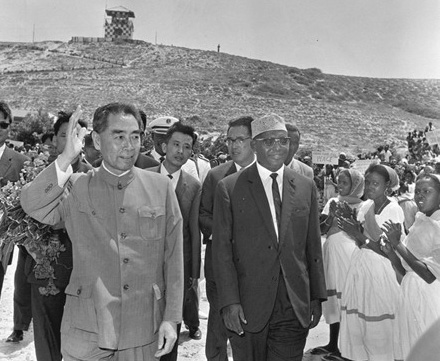
From late 1956 to early 1964, he visited 28 Asian and African countries, including Egypt, Algeria, Ghana, Guinea, Mali, and Pakistan, outlining five principles for developing China’s relations with Asian and African countries and eight principles for China’s foreign aid. He emphasized that aid should be based on the principles of equality, mutual benefit, and giving respect to the sovereignty of the aided countries without any political condition attached. Zhou’s visit to Egypt, Algeria, Morocco, Tunisia, Ghana, Mali, Guinea, Sudan, Ethiopia, and Somalia between December 14, 1963, and February 4, 1964, is particularly significant. Zhou’s visit to 10 African countries in approximately two months is an example of successful diplomacy. Zhou also became the first Chinese head of state to visit the African continent. Thanks to Zhou’s successful diplomacy, independence struggles in Africa were supported, and the foundations of Sino-African Friendship were laid. Zhou Enlai’s visits to Africa also played a positive role in influencing African countries’ votes for the recognition of the PRC at the UN.
China proposed various methods for developing relations with developed countries
Developing non-governmental relations to encourage the development of formal relations with Japan, establishing diplomatic relations at the chargé d’affaires level with the UK and the Netherlands, making France the first Western power to establish diplomatic ties with China by establishing full diplomatic relations combining principle and flexibility, sitting down and negotiating with the US while resolutely opposing US aggression and interference in China’s internal affairs, opening the door to Sino-US contacts by directly guiding Sino-US talks at the ambassadorial level in Geneva and Warsaw between 1958 and 1970; taking advantage of the rare opportunity provided by the change in US policy towards China and making the strategic decision with Mao Zedong to open Sino-US relations.
He Pioneered “Ping-pong” Diplomacy
In 1971, he directly spearheaded and chaired China’s famous “ping-pong” diplomacy. He welcomed several secret visits to China by US Assistant Secretary of State for National Security Affairs Henry Kissinger, and the official visit of US President Nixon to China in 1972. He participated in the drafting and publication of the Shanghai Joint Declaration and took part in other diplomatic activities; while resolutely opposing the Soviet Union’s attempts to interfere in and control China’s internal affairs, he tried to prevent the deterioration of bilateral relations between the two countries. He met with Soviet Premier Alexei Nikolayevich Kosygin at Beijing Airport in 1969 to reduce tensions between the two countries. He decisively blocked the serious interference of the Lin Biao and Jiang Qing Group in China’s foreign relations and made maximum efforts to correct the far-left mistakes and compensate for the losses in China’s practical foreign relations.
He is skilled at combining diplomatic theory with practice, principle with flexibility, and internationally accepted diplomatic rules. By blending them with Chinese traditions and philosophical thought, he has created a uniquely Chinese diplomatic style and approach. His major works include Selected Works of Zhou Enlai (Volumes 1 and 2). His main diplomatic writings and explanations are collected in Selected Diplomatic Works of Zhou Enlai.
Sources: Ministry of Foreign Affairs of PRC, Global Times, Baidu
About the Author