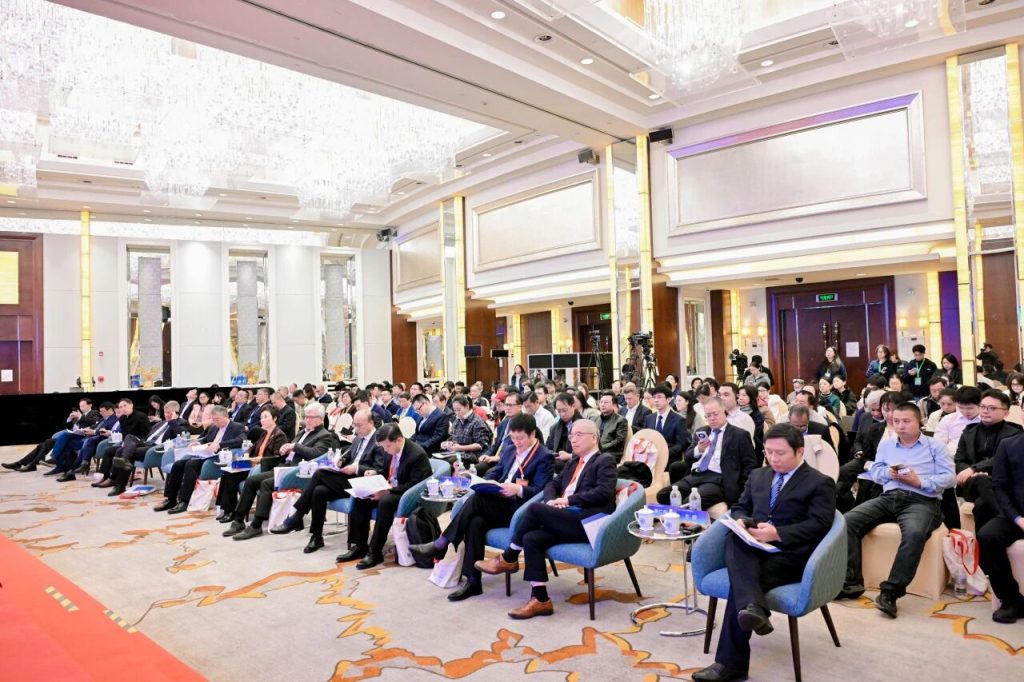
The annual 9th academic forum, organized every November by Fudan Institute of Belt and Road & Global Governance Institute and the Silk Road Think Tank Association, was held at Fudan University on November 28-29. This year’s forum, themed “Expanding the Broadness and Depth of the Belt and Road” was attended by expert academics from various Chinese universities and international participants. Notable figures among this year’s forum participants included Ma Hui, Vice Minister of the International Department of the CPC Central Committee, Sha Hailin, former chairman of the Shanghai People’s Association for Friendship with Foreign Countries; Zhou Qiangwu, Vice President and CAO of the New Development Bank; and Erik Solheim, former Norwegian Minister of Environment and International Development.
“The Global South Has Surpassed the Global North”
Zhou Qiangwu, Vice President of the New Development Bank, stated that the Palestine and Ukraine Wars and Tariff Wars have shown that multilateral mechanisms such as the UN, World Bank, World Trade Organization, and G7 are unfortunately no longer functioning. We celebrated the 70th anniversary of the Bandung Conference, and the Global South countries have surpassed developed countries; BRICS has now surpassed the G7. China is making significant contributions both to global governance and to the development of humanity. It is becoming a role model for the Global South and the world, Zhou said. Zhou added, “The yuan has become the third-largest global payment and circulation currency, and the New Development Bank has become a golden brand for the Global South. Over the past decade, the New Development Bank (NDB) has carried out its mission, respected the sovereignty of its member countries, adopted a country-based system, developed financing in local currencies, and significantly impacted the development of member countries with high-quality investment projects, earning high praise from member countries and the international community,” he said. He emphasized that in recent years, the political and economic power of Global South countries has increased significantly, and cooperation mechanisms have become increasingly mature.
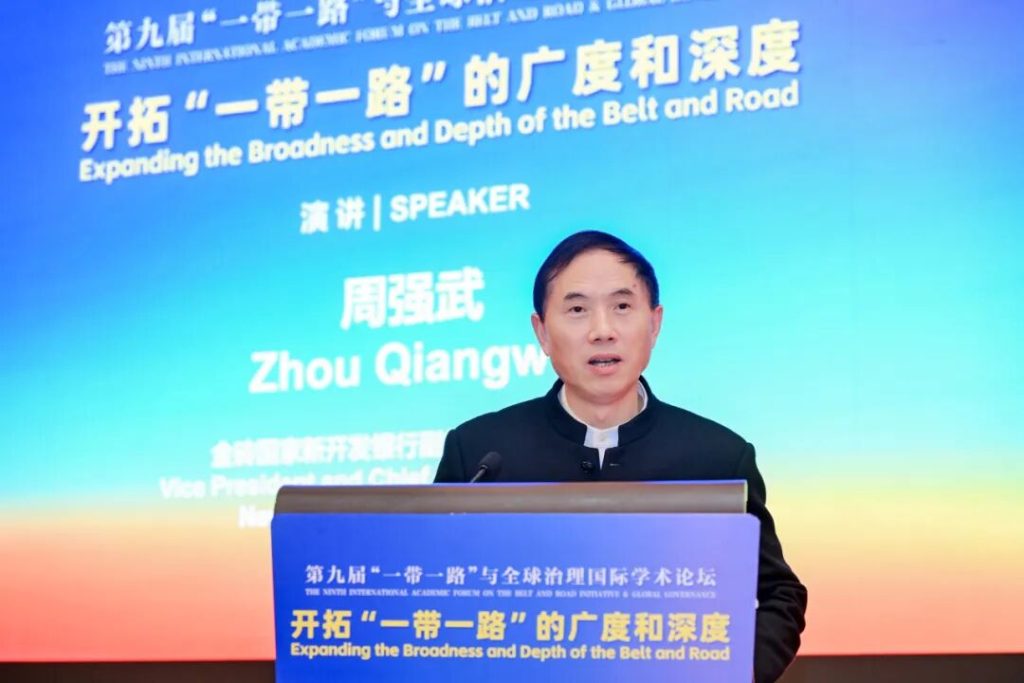
The NDB is the most important concrete achievement of BRICS cooperation, which actively promotes multifaceted cooperation among countries in the political, economic, commercial, scientific, technological, and cultural fields and plays a positive, stabilizing, and benevolent role in international relations. As stated by NDB President and former Brazilian President Dilma Rousseff, she believes that the Chinese government has resolutely safeguarded the interests of the Global South, resolutely supported multilateralism, resolutely defended international justice and fairness, and set an example for the international community by promoting the building of a community with a shared future for mankind.
China has become a leader in the global green transition
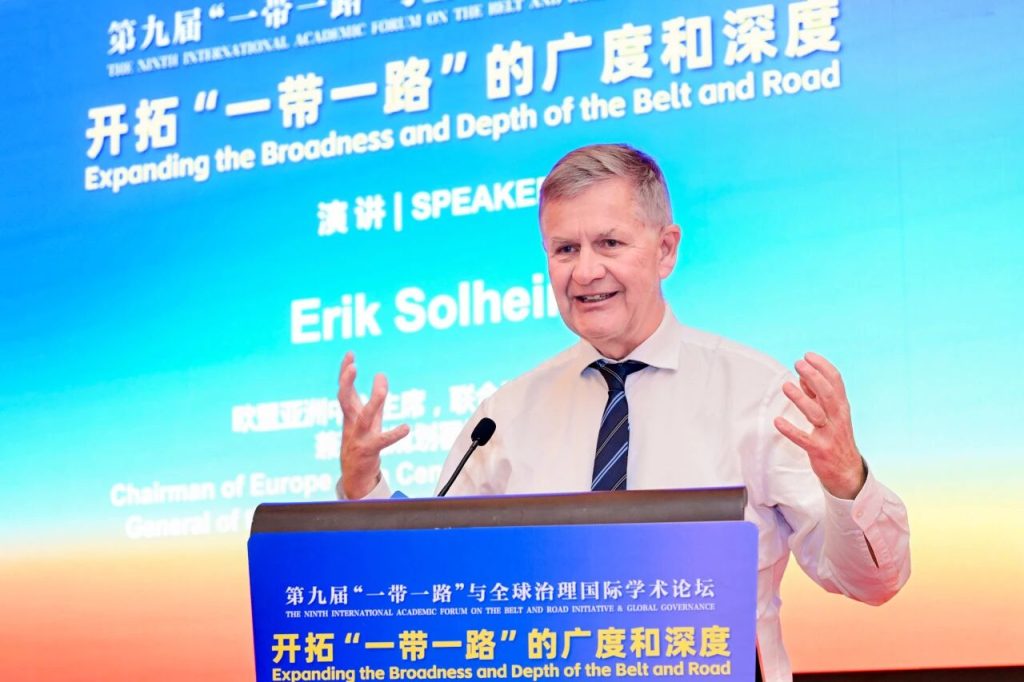
Speaking at the forum, Erik Solheim, former Norwegian Minister of Environment and International Development and former Executive Director of the United Nations Environment Programme (UNEP), praised China’s efforts to steer the KYG towards environmental transformation, describing China as an indispensable force in the global green transition. Solheim emphasized in his speech that the Chinese-built Mombasa-Nairobi Railway, which opened in 2017, has increased Kenya’s GDP and provided employment for tens of thousands of people. Solheim cited China’s own transformation as an example based on his observations. Solheim said, “When I came to Shanghai in 1994, there were few private cars and only one subway line. There were no skyscrapers like today. Today, Shanghai has become one of the world’s major cities and an important hub for the transition to green energy.” In the 19th century, Britain and France were the hegemonic powers. In the 20th century, the US and Britain dominated the world. But today, China is becoming dominant in sectors such as digitalization, medicine, green energy, and artificial intelligence, which are productive forces, he said. Solheim concluded by saying, “We can solve all global problems together. If we work together, we will solve problems. If we separate or fragment, we will not solve problems. Together, we can create a society with a shared future.”
Various Topics Discussed at the Roundtable Discussion
Following the speeches, a roundtable discussion was held. Qian Jun, Executive Dean of the Fanhai International School of Finance at Fudan University, emphasized that US stablecoins are replacing the US dollar. He discussed how China could adapt to this system and how the use of the Digital Yuan could be increased.
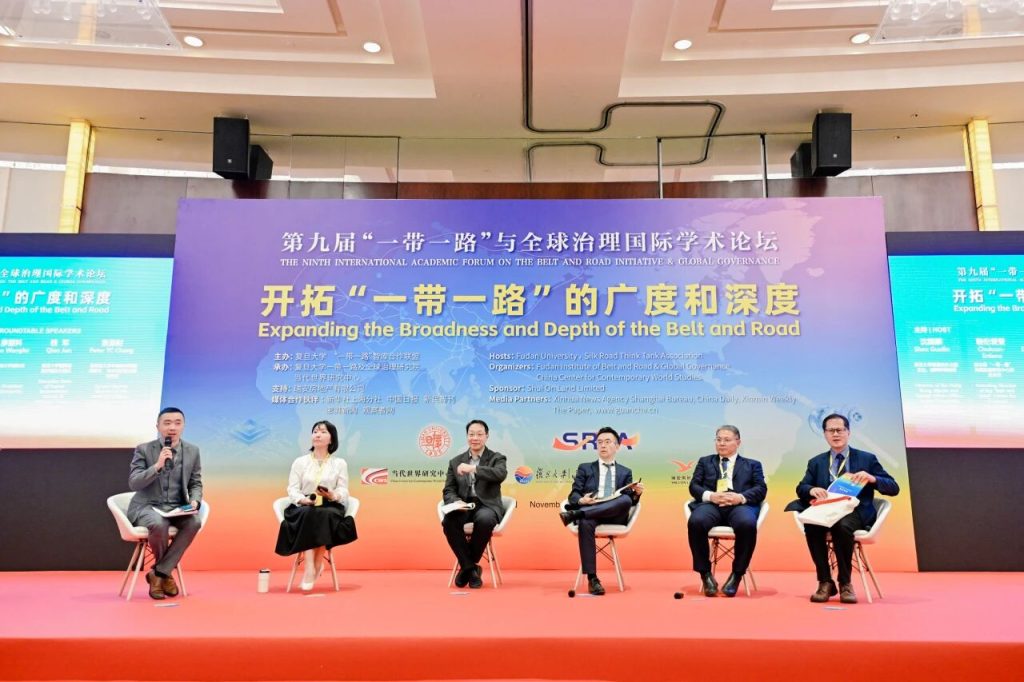
Di Dongsheng Dean of the Institute of Area Studies at Renmin University emphasized that China has made significant progress in drone technology compared to the US, but has not utilized this in exports. He stated that the most important reason for this is China’s low production costs, which he described as an advantage. However, he underscored that despite its low costs, China does not export weapons because they could easily fall into the hands of terrorist organizations, which could lead to dangerous situations. He added that this is also because China focuses on peaceful and secure development rather than arms exports.
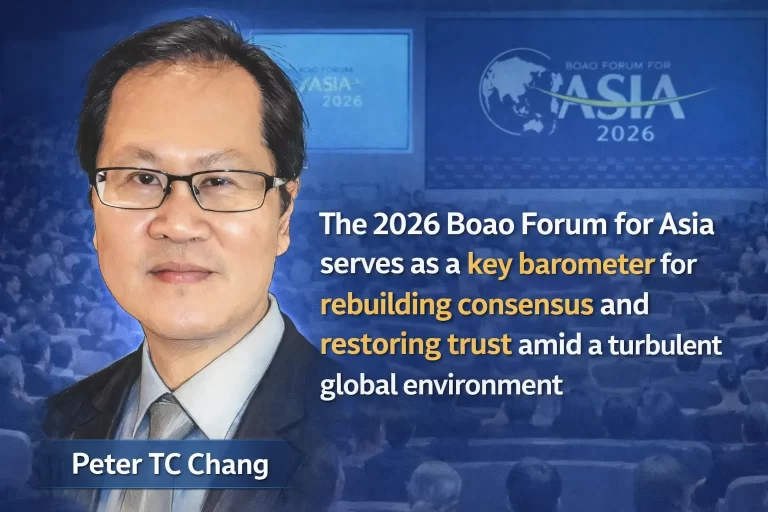
Peter TC Chang, a specially appointed researcher of the Malaysia-China Friendship Association, stressed that China has made tremendous progress in green and high technology and that the technological gap between China and South Asian countries is rapidly widening. He said that China should therefore transfer technology to prevent the gap between China and South Asian countries from widening further. To this end, he stated that China could establish people-to-people ties by entering the education sector in Malaysia and opening universities. He emphasized the importance of mutual learning and technology sharing.
News: Necati Demircan / Shanghai
About the Author