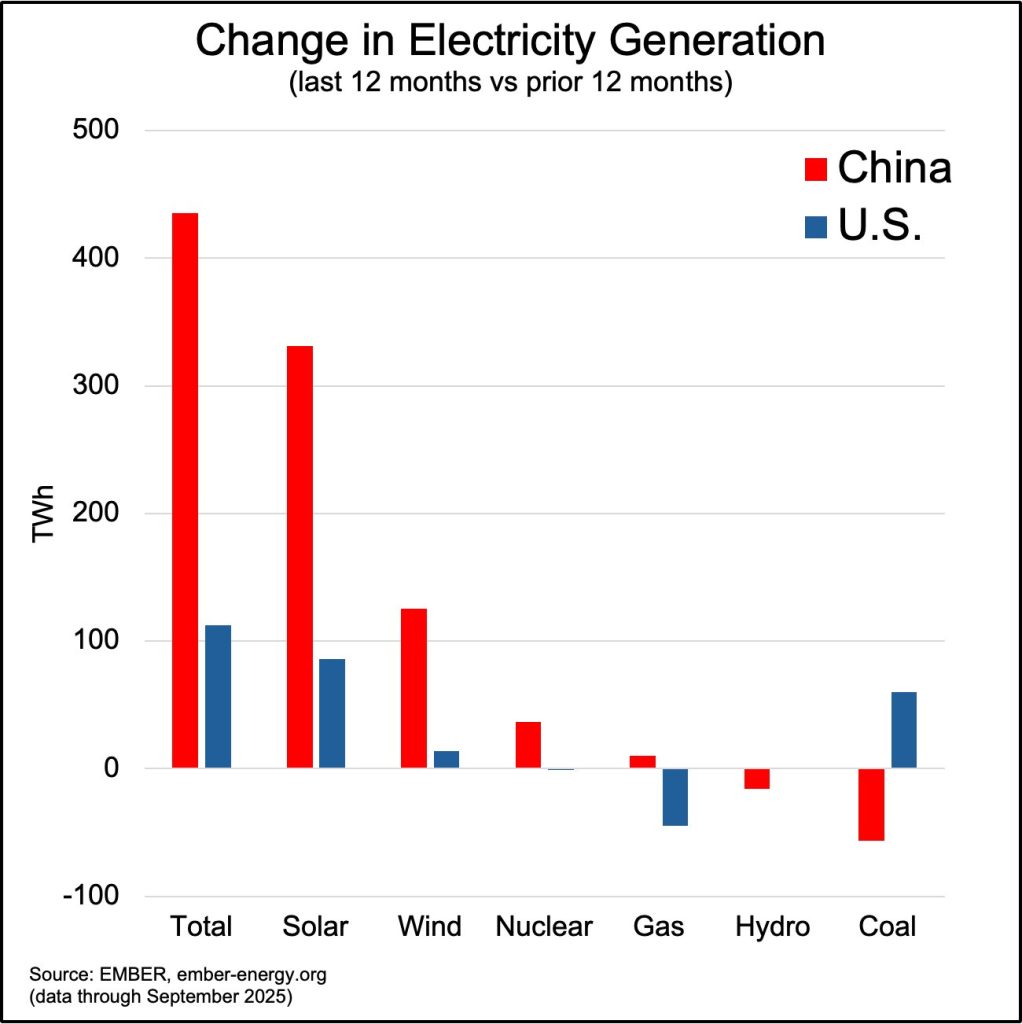
In 2024, China generated 38% of its electricity from low-carbon sources. Hydroelectric power plants accounted for the largest share of clean and environmentally friendly energy generation, with hydroelectricity accounting for 13% of the total in 2024. On the other hand, wind and solar energy accounted for 18% of China’s total energy generation. Considering that wind and solar energy account for 15% of global energy generation, China’s generation exceeds the global average. This figure is also significantly higher than that of its neighbors Japan (11%) and South Korea (6%).
The biggest change in China’s electricity generation in 2024 was the growth in the share of solar energy. China contributed more than half of the global increase in both solar and wind energy generation. In 2024, China, the world’s largest electricity consumer, met one-third of global electricity demand, and clean energy generation covered more than 80% of the demand increase.
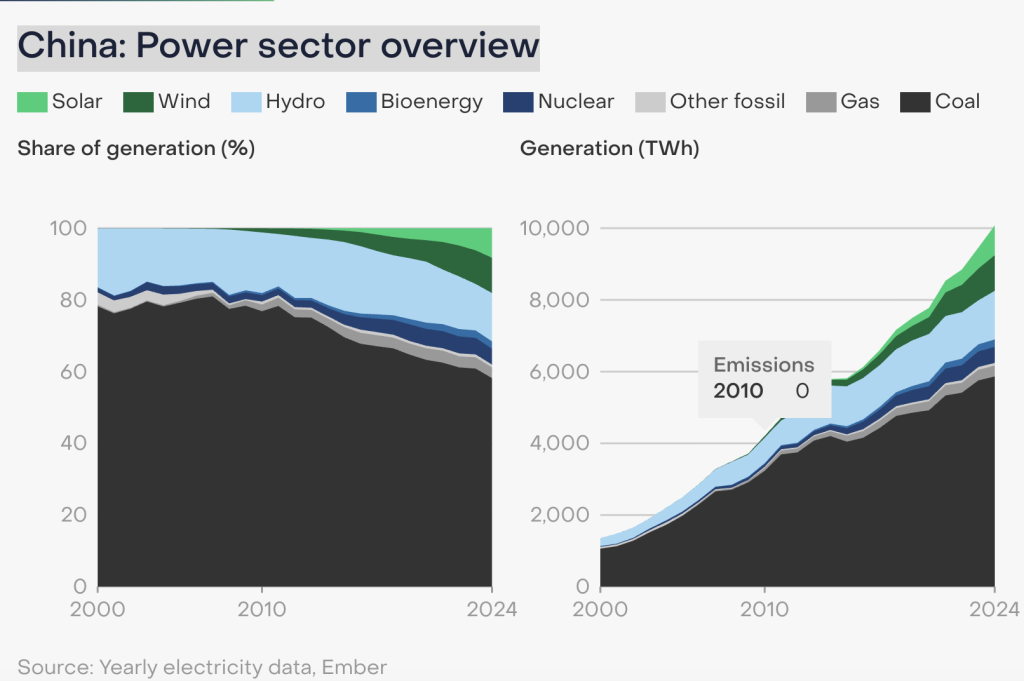
Over the past two decades, emissions from China’s energy sector have tripled, but this rate has slowed significantly thanks to the rapid expansion of renewable energy and efficiency improvements in coal plants. However, the transition to cleaner energy remains a complex challenge.
China aims to have at least 2,461 GW of renewable electricity capacity by 2030. This figure is double the 2022 figure and represents a nearly threefold increase in solar power capacity.
Despite this progress, fossil fuels still accounted for 62% of total electricity generation in 2024. However, the table above shows that while the share of clean and environmentally friendly electricity generation increased over the years, the share of coal decreased from over 80% to 62%.
China is also the world’s largest emitter of coal mine methane (CMM), and emissions from coal mining are increasing. To control this, China has revised its policy for gaseous mines. By 2027, gas-emitting mines with methane concentrations above 8% must capture or destroy the methane. Addressing CMM would significantly reduce total emissions from the power and steel sectors.
Source: EMBER
About the Author