
First detected in a nurse working at a private hospital near Kolkata, the capital of West Bengal, the virus has recently been reported in five confirmed cases, including a healthcare worker. One patient remains in critical condition, and approximately 100 people have been placed under home quarantine.
What is Nipah Virus?
Nipah virus (NiV) is a deadly zoonotic RNA virus that can be transmitted from animals to humans. Nipah virus is not new to Asia. First identified in 1998 during an outbreak among pig farmers in Malaysia, the virus has since become a global concern. A major outbreak in Malaysia and Singapore between 1998 and 1999 resulted in over 100 deaths. Cases are reported almost every year in various parts of Asia, and risk levels vary in Bangladesh, India, Malaysia, Singapore, Cambodia, Indonesia, Madagascar, the Philippines, and Thailand. The World Health Organization (WHO) classifies Nipah virus as a high-risk pathogen that can cause severe respiratory illness and fatal encephalitis. Symptoms include fever, headache, lethargy, disorientation, and in some cases, coma. The mortality rate can exceed 40%. Currently, there is no specific treatment or vaccine available, and the incubation period ranges from 4 to 14 days, sometimes extending up to 45 days.
How is Nipah Virus Transmitted?
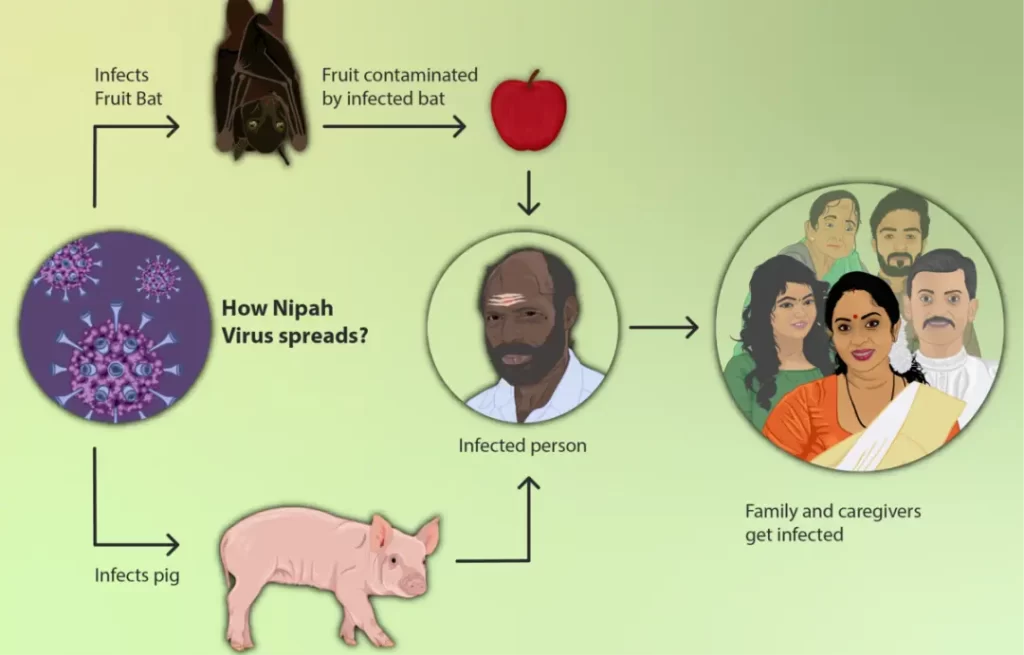
Animal-to-Human Transmission: Fruit bats, the natural source of Nipah virus, contaminate fruits or water sources with their saliva, urine, or feces. Consumption of contaminated food or water leads to human infection. Farm animals, such as pigs, can also act as intermediate hosts after exposure to contaminated feed or feces.
Human-to-Human Transmission: Although less potent, human-to-human transmission can occur through close contact with infected individuals, particularly through bodily fluids. Healthcare workers and their family members are at higher risk during prolonged and unprotected exposure.
About the Author