In an era of great-power competition, China is stepping boldly into the role of global peacemaker brokering the landmark Saudi-Iran détente in March 2023, facilitating the ceasefires in northern Myanmar , and helping secure the Thailand-Cambodia border truce in late 2025. In South Asia’s most perilous flashpoint, China cannot credibly act as a mediator.
China’s Delayed Public claims
At a December 2025 symposium, Foreign Minister Wang Yi asserted that Beijing had taken an objective and just stance, playing a de-escalatory role in of the May 2025 India-Pakistan conflict. Pakistan endorsed this claim in early January 2026, describing Chinese contacts as diplomacy for peace. Indian officials emphatically rejected Wang Yi’s claims, reiterating that the May 10 ceasefire was secured through military-to-military coordination at Directors General of Military Operations (DGMO) level and dismissed prior assertions by Trump that he had brokered the truce.
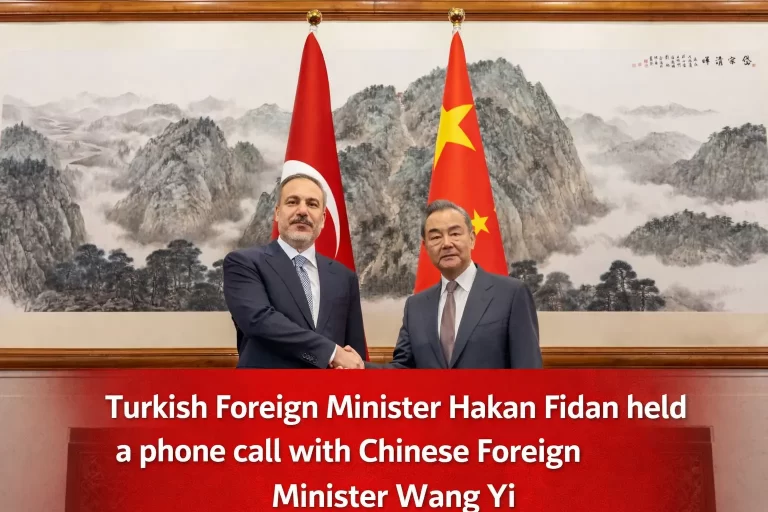
Wang Yi’s engaged privately with Pakistani Foreign Minister Ishaq Dar and Indian National Security Advisor Ajit Doval in May 2025 indicate Beijing did play off-the-record channel in urging Pakistani restraint. Surfacing seven months after the crisis, this delayed public claim came after the April 2025 Pahalgam attack which spiraled into military-diplomatic standoff and led to the suspension of the Indus Waters Treaty. China’s move reads less like post-hoc crisis diplomacy and more like a bid to offset U.S. influence in South Asia.
The May 2025 Crisis: A Field Test for Chinese Arms
India carried out targeted precision strikes against alleged terrorist infrastructure, catching Pakistani militarist off-guard. Operation Sindoor quickly escalated into mutual counterstrikes, artillery shelling, drone operations, and nuclear signaling. Pakistan decried the strikes as an “act of war” or “unprovoked agression” and undertook Operation Bunyan-un-Marsoos, hitting at Indian military bases. Several advanced Chinese systems, including J-10C fighter, PL-15 air-to-air missiles, and HQ-9 surface-to-air defenses, made their operational debut, facing India’s Western- and Russian-sourced arsenal.
The U.S.-China Economic and Security Review Commission (USCC) 2025 Report noted that the four-day clash functioned as a high-stakes field test for Chinese weaponry. Beijing leveraged the clash to test discrediting French Rafale fighter. Beijing reportedly provided Pakistan with live intelligence on Indian military positions and later offered to sell 40 J-35 fifth-generation stealth fighter jets, KJ-500 aircraft, and ballistic missile defense systems, even as Islamabad increased its defense budget by 20% to $9 billion.
China’s Asymmetric Ties with Pakistan and Arms Supplies
Beijing’s views South Asia’s nuclear triad as stabilized by balanced defenses that prevent dominance by any single power. Chinese official line in 2025–2026 joint statements describe ties with Pakistan as an “ironclad friendship”, rather than one-sided military arming.
Supplying Pakistan with defensive systems can nevertheless enable early offensive strikes or nuclear readiness. Analyst note precedents: Russia’s sale of S-400 air defence systems to India has not precluded Moscow’s diplomatic engagement across South Asia. So why, then, is China’s provision of defensive systems to Pakistan is treated problematic for mediation. Without credible air defence, Pakistan would face intense domestic pressure to escalate offensively. Ultimately, Arms transfers alone, ipso facto, do not disqualify mediation.
Territorial Disputes, Nuclear Asymmetries, and Impartiality
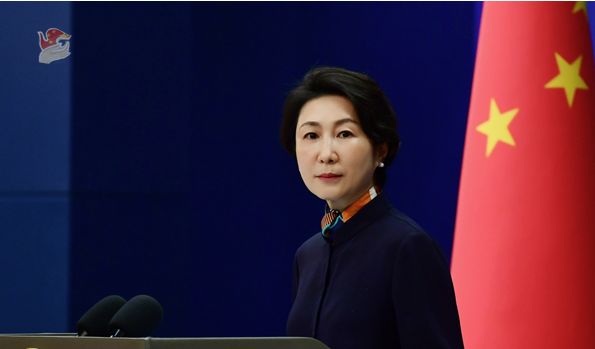
China’s territorial strife with India undermine its impartiality. In January 2026, Foreign Ministry spokesperson Mao Ning stated that the Shaksgam Valley “belongs to China” and defending related infrastructure and triggering rhetorical escalation. Beijing favors “equitable” UNSC reform but when it comes to India’s bid for a permanent seat, Beijing treats it as a zero-sum political game.
Several factors contribute to the perception that China is not in a position to act as a neutral mediator. China remains Pakistan’s dominant major arms supplier. Stockholm International Peace Research Institute (SIPRI) data show that China accounted for 81% of Pakistan’s major arms imports between 2020 and 2024.Pakistan is also the sole recipient of the J-10C, with 20 aircraft delivered as of May 2025.
In parallel, China is also supporting Pakistan’s naval modernization via the Hangor-class submarine program, slated for initial delivery in 2026.Though short of a full nuclear-powered triad, Pakistan’s growing strike-intercept capabilities enhance its second-strike credibility and limit China’s influence in the Indo-Pak rivalry. China does not publicly consider India as a nuclear threat and it can live peacefully with Pakistan nuclear state. At the same time, India view China as a hostile power due to unresolved Line of Actual Control (LAC).South Asia’s deterrence has been maintained by nuclear arsenals across the India-Pakistan-China axis.
India and China lack official nuclear-related discussions, largely due to China’s reticence to engage India on nuclear matters. South Asian nuclear confidence-building measures (CBMs) have taken the form of declaratory commitments or bilateral accords between India and Pakistan. No formal nuclear dialogue exists among these states. Beijing downplays India and Pakistan as legitimate nuclear states under NPT and refuses to treat them as equal partners in nuclear discussions.
As a nuclear-armed state, India maintains a posture of credible minimum deterrence and has formally adopted a No First Use (NFU) policy. China adopted an NFU earlier, in 1964, immediately after its first nuclear test, reaffirmed in recent years, including in the 2025 arms control white paper. China’s 2000 National Defense White Paper defined its nuclear forces as maintaining a “small but effective nuclear counterattacking force” to deter attacks. For the first time in China’s history, it officially relied on the term “nuclear deterrence” in its declaratory policy.
Since the 2017 Doklam standoff and the 2020 Galwan Valley clashes, China-India relations have sunk to their nadir in decades, with only a partial thaw emerging in late 2024.Through CPEC, the Belt and Road Initiative has turned the Indian Ocean into a strategic lifeline for Pakistan, bypassing the Malacca Strait chokepoint. India suspects the corridor is a Trojan horse. In its January 2026 briefing, India rejected Chinese infrastructure developments in the Shaksgam Valley via CPEC as attempts to alter ground reality. It fundamentally undermines China’s credibility as an impartial mediator in any India-Pakistan conflict. Geopolitical analyst Andrew Korybko, in a recent commentary, remarked that China is “uniquely unqualified to mediate… since it has territorial disputes with India and arms Pakistan to the teeth.”
India’s long-standing policy precludes third-party mediation on Jammu and Kashmir, treating the issue as strictly bilateral. China’s mediation claims generate minimal strategic payoff. Beijing desire to serve as mediator shares Sino-Russian interest in minimizing U.S. influence in South Asia. Washington and Beijing are in competition over narratives to see who can claim that their intervention led to the ceasefire. China’s motivation asserting the claim has to do with global heft and avoiding reputational costs.
The views expressed in this article are solely those of the author and do not necessarily reflect the editorial policy or official position of The Silk News.
About the Author