Wuhan, the capital of Hubei province in China, is one of the important cities in Central China. Wuhan made a bad name for itself, especially with the Covid19 epidemic that surrounded the whole world. But Wuhan has been an important center of China throughout history. Wuhan, where the Yangtze River flows through the center of the city, was also known as Hankou in the past.
1- Yellow Crane Tower
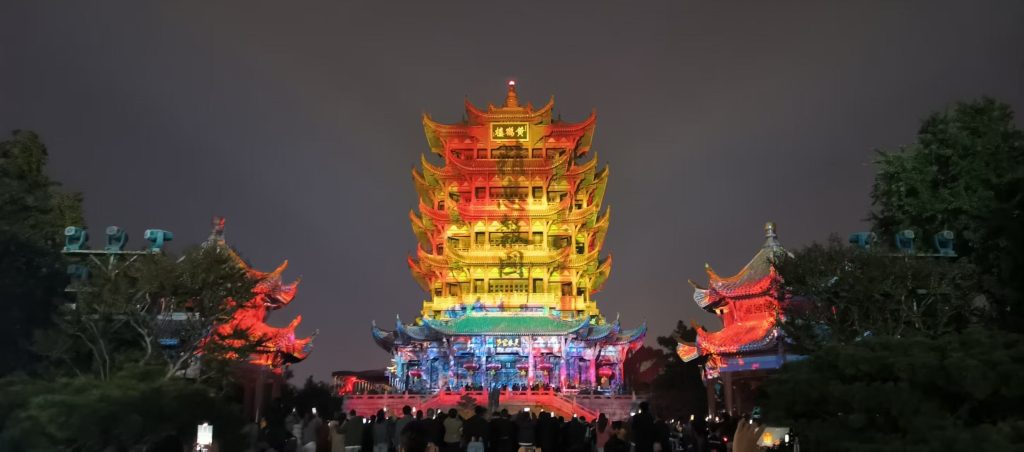
When you think of Wuhan, the first place that comes to mind is, of course, the Yellow Crane Tower. If you happen to be in Wuhan, leaving without seeing the Yellow Crane Tower will not be considered a complete tour of Wuhan. But remember, you have to pay 120 RMB (about $17) per person for entrance. Inside, you will be greeted by various shows and most importantly, the magnificent light show of the tower. A note for this place is that it has to be dark. I think the ideal time is around 7 p.m. As the weather gets darker, the Yellow Crane Tower becomes more fascinating. Frankly, I spent nearly 2 hours wandering around. The Yellow Crane Tower was built on the snake hill in Wuhan and has become the symbol of Wuhan. The tower was first built by Sun Quan, king of Wu, during the Three Kingdoms Period in 223 as a watchtower for his army. However, over hundreds of years, its military function was forgotten and it began to be used as a place with a beautiful view. In the following centuries, the tower was destroyed and rebuilt many times. During the Ming and Qing Dynasties alone, the tower was destroyed seven times and rebuilt seven times. It was completely destroyed by a fire in 1884 and was not rebuilt until 1981. The tower that stands today was built based on its design during the Qing Dynasty. The tower is 51.4 meters high and has five floors. With its yellow upward-curving fringes, each floor appears to be designed to resemble a yellow crane spreading its wings to fly. For this reason, the tower was called the Yellow Crane Tower. When you climb the tower, you will see the sparkling view of the city and the Yangtze River. You will see a large crane statue towards the exit door of the tower. If you go at night, do not leave after visiting the tower. Don’t miss the light show that starts around 21:00 when the tower’s visiting hours close.
Estimated Visiting Time: Approximately 2 hours (With Shows)
Ticket: 120 Yuan (about $17)
2- Jianghan Road
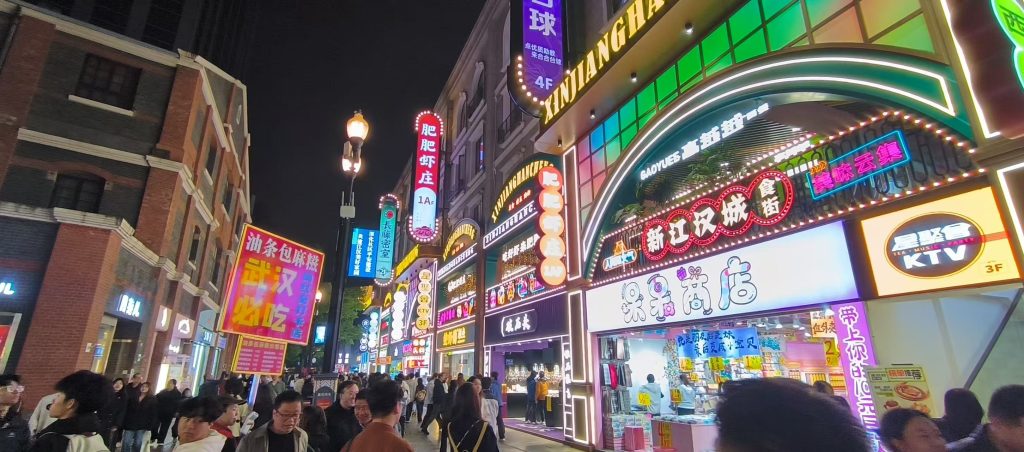
We can say that Jianghan Road, which is open only to pedestrian traffic in Wuhan, is a kind of Istiklal Street or Nanjing Road. You can take a walk on this street, especially at night, and meet your shopping and dining needs. Personally, while walking on the street, I witnessed the interesting dance show of various brightly designed stores on the street. I can say that it is a very fun walking street.
Estimated visiting time: 1 or 2 hours
Ticket: Free
3-Jianghan Customs House (Hankou Customs House)
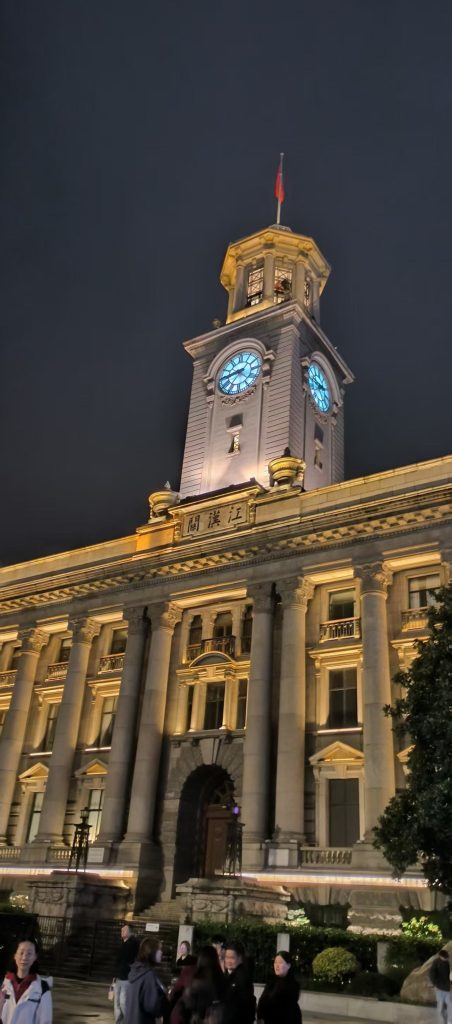
Located at the end of Jianghan Road, Jianghan Customs House is one of the oldest customs houses in China, built between 1922-24. It has also become one of the important symbols of the city with its architecture, watch tower and lighting. If you are visiting the street, do not leave without taking a photo here.
Estimated Visiting Time: 15 minutes
Ticket: Free
4-Take Photos with the Yangtze River
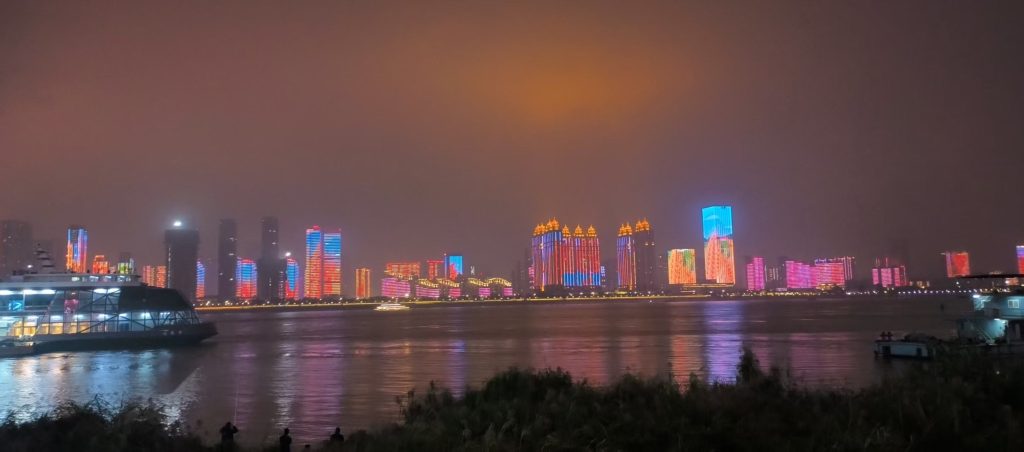
After visiting Jianghan Roadt and taking photos with Jianghan Customs House, walk along the Yangtze River, one of the most important rivers in China, and take photos. Yangtze (Chang Jiang 长江) means long river in Chinese. Stretching for 6,300 km, the Yangtze River is known as the longest river in Asia. Additionally, the Yangtze river is the third longest river in the world after the Nile and the Amazon. Additionally, the river has played a key role for both China and Wuhan throughout history due to transportation and trade.
Estimated visiting time: Half an hour
Ticket: Free
5- Wuhan 1911 Revolution Museum
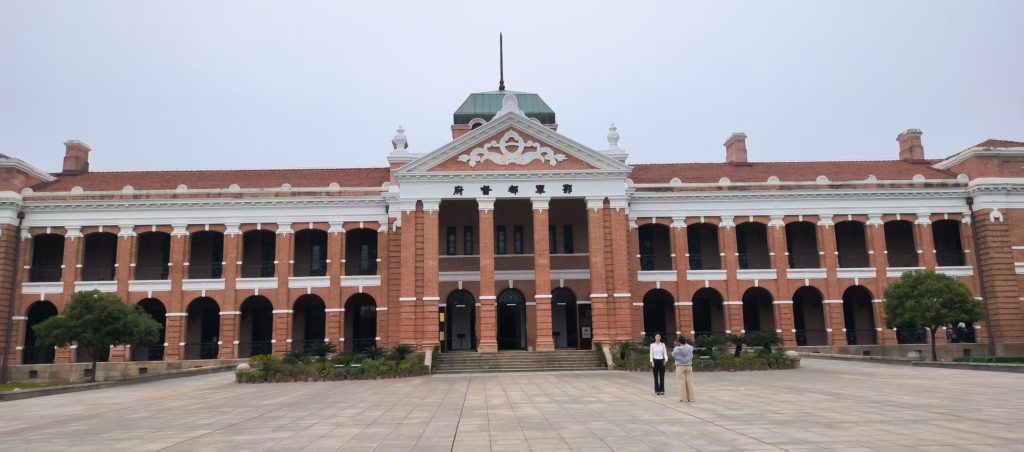
Hubei Military Government Building, also known as the Red Building. The Wuchang Uprising, which sparked the 1911 Xinhai Revolution in China, started in this building on October 10, 1911. The day after the uprising, the Hubei Military Government was declared established. The spark started by the Wuchang Uprising brought the end of the monarchy that lasted for more than 2000 years in China. It played a role the establishment of the Republic of China and the process leading to the Socialist Revolution.
Estimated visiting time: 1 or 1 and a half hours
Ticket: Free
6- Hubei Provincial Museum
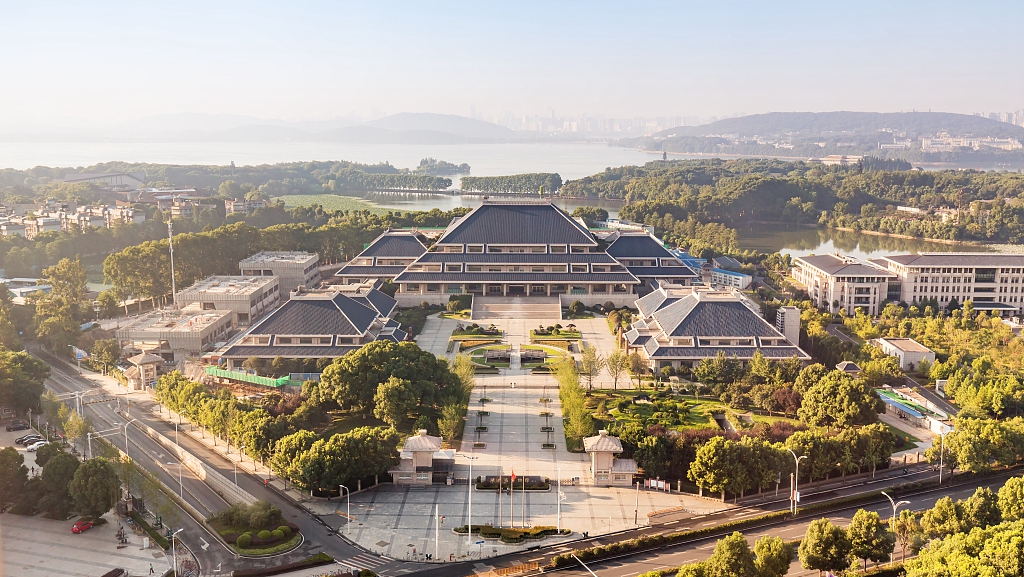
More than 230 thousand artifacts are exhibited in the Hubei Provincial Museum, located next to the beach of Wuchang East Lake. These artifacts include prehistoric pottery from the Qujialing and Shijiahe cultures, bronze items from the Panlongcheng and Zeng State, etc. The most valuable artifacts of the museum are undoubtedly the human skull fossils from Yunxian County, the Goujian Sword, the bells from the Marquise Yi Tomb of the Zeng State, and the Blue and White plum vase symbolizing the four loves from the Yuan Dynasty. Hubei Provincial museum. Also, the Sino-Indian Diplomatic talks between Xi Jinping and Narendra Modi took place here in 2018. However, do not forget that advance reservations are required to visit the museum and the museum is closed on Mondays. Unfortunately, I couldn’t visit this place because my trip fell on a Monday.
Estimated visiting time: 1 or 2 hours
Ticket: Free
Closed days: Monday
7- Wuhan University and Cherry Blossoms
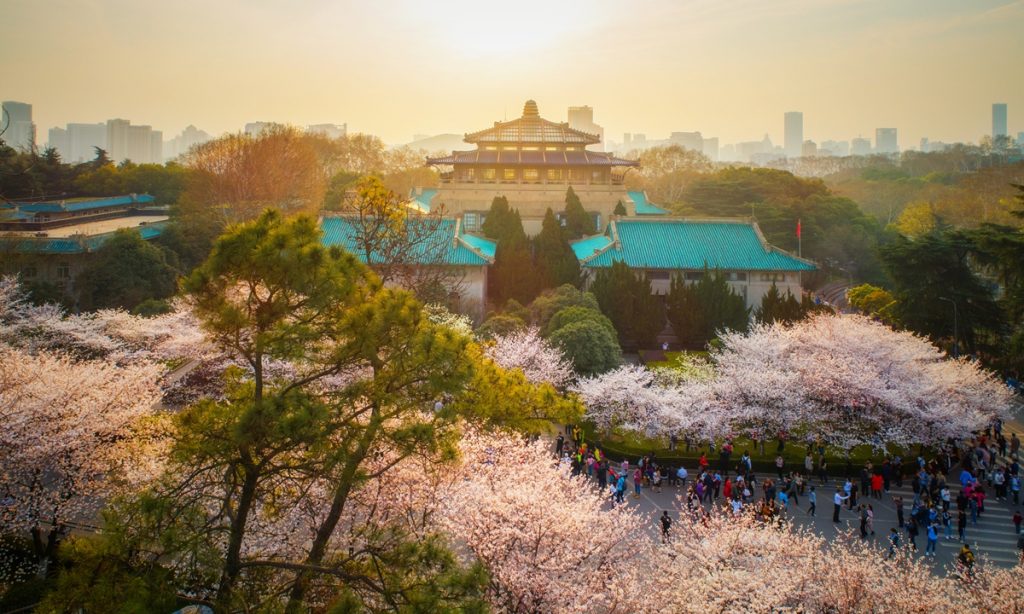
If you are visiting Wuhan in March or April, be sure not to miss the cherry blossom season. Wuhan University, founded in 1893 and one of the top 10 universities in China, is also among the top 150 universities in the world.
8- Guiyuan Temple
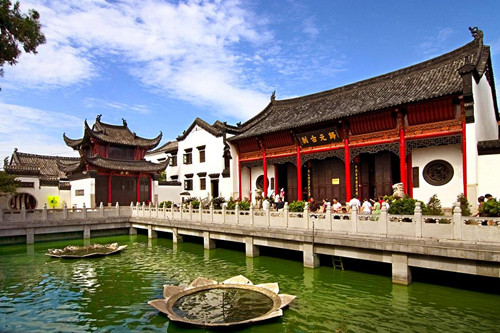
Guanyin, a Buddhist goddess, is considered the goddess of wealth in Chinese mythology. It is a Buddhist temple located in an urban area of Hanyang district in Wuhan. The temple was built in the 15th year of Shunzhi (1658) of the Qing Dynasty. The Double-Faced Guanyin: The statue, made of brass and surrounded by white marble railings, is considered extraordinary nationwide with its total height of 21.8 meters (including the 3-meter-high sacred lotus seat) and weight of 20 tons. One reason for the Guiyuan Temple’s main attraction is the Hall of Arhats. There are 500 arhats in the Hall of Arhats.
Ticket: 10 Yuan
Opening Hours: 08:00-17:00
9-Wuhan Yangtze River Bridge
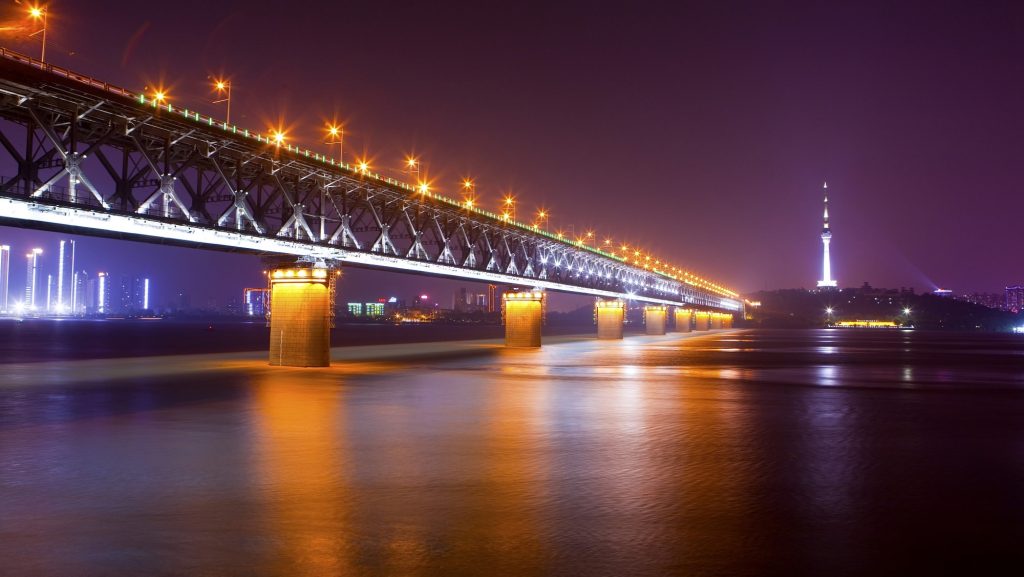
Located between Snake Mountain and Turtle Mountain in Wuhan, the Wuhan Yangtze River Bridge is the first railway and road bridge built after the founding of the People’s Republic of China. Therefore, it is called “the first bridge over the Yangtze River in China.” In a poem written in 1956, Chinese leader Mao Zedong wrote, “A bridge will rise to unite the north and south, turning a deep chasm into a passage.” Mao’s words are a true depiction of the important role the Wuhan Yangtze River Bridge plays in communication between the north and south of China.
10-East Lake Scenic Area
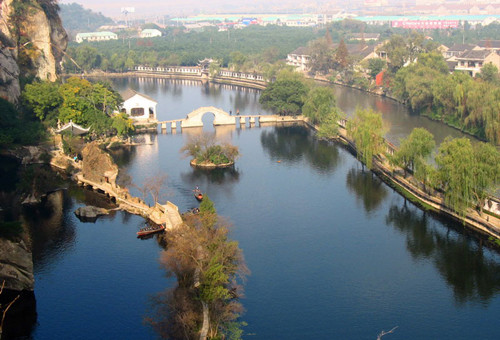
East Lake in Wuhan, with its rippling waters and picturesque scenery, is China’s second-largest city lake. It’s not only a haven for Wuhan residents but also an ideal place for tourists to explore the city’s charm. You can cycle and walk along the world-class East Lake Green Trail, enjoying the beautiful lakeside views while feeling the gentle spring breeze.
11- Zhiyin Hao (Optional)
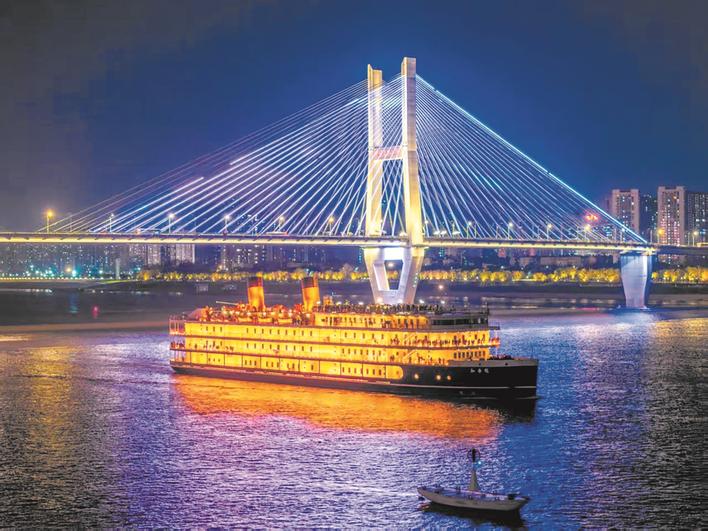
Zhiyin Hao offers a new and multifaceted theatre experience on the shore of the Yangtze River. A steamship reflecting the nostalgic style of the 1920s and the magnificent Hankou pier serve as a floating theatre showcasing contemporary Wuhan culture through the latest international art and innovative performance forms.
Written by: Necati Demircan / Shanghai
About the Author