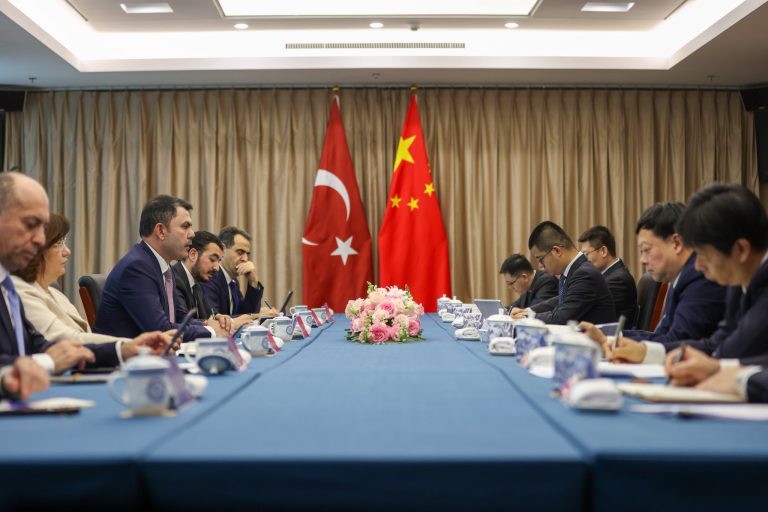
Vladimir Norov, former Foreign Minister of Uzbekistan and former Secretary-General of the Shanghai Cooperation Organization (SCO), emphasized in a LinkedIn post that the Turkish Investment Fund (TIF) could make significant contributions to the development of the Middle Corridor. Here is Norov’s post:
The Middle Corridor (Trans-Caspian International Transport Route), including the Zangezur Corridor / TRIPP, has become a strategic priority amid global supply-chain reconfiguration and rising East–West trade
Its relevance is no longer in question — the key challenge today is capacity, efficiency, and integration.
In this context, the Turkic Investment Fund (TIF) is well positioned to play a catalytic role.
With an initial capital of USD 600 million and plans to scale up through capital increases and international markets.
Under a conservative scenario, TIF’s capital could grow to USD 1–1.5 billion by 2030, while a favorable market and geopolitical environment could enable even stronger expansion
Importantly, the Fund emphasizes capital growth linked to project performance, which enhances credibility and long-term sustainability
TIF can contribute in several critical ways:
From transport route to economic corridor
By investing not only in railways, ports, and logistics hubs, but also in customs digitalization, energy security, and digital connectivity, TIF can help turn the Middle Corridor into an integrated economic ecosystem rather than a standalone transit route.
De-risking strategic projects
Cross-border infrastructure projects often suffer from coordination and political risks
TIF’s co-financing alongside DFIs and IFIs can reduce these risks, crowd in private capital, and unlock larger investments than its balance sheet alone would allow.
Digitalization as a force multiplier
As recent data shows, freight volumes on the Trans-Caspian route grew sharply in 2024, and with the right investments could reach 11 million tons by 2030
Digital customs, e-documentation, and cross-border data exchange can significantly boost throughput without proportional capital spending.
Aligning national priorities with regional connectivity
By linking corridor investments with national development goals — including post-conflict reconstruction and inclusive growth — TIF strengthens political ownership and long-term sustainability
If governed with strong investment discipline and implemented through a phased, risk-aware strategy, the Turkic Investment Fund can become a cornerstone institution for the Middle Corridor’s next stage of development, helping transform it into a competitive, resilient, and future-ready Eurasian connectivity backbone
About the Author