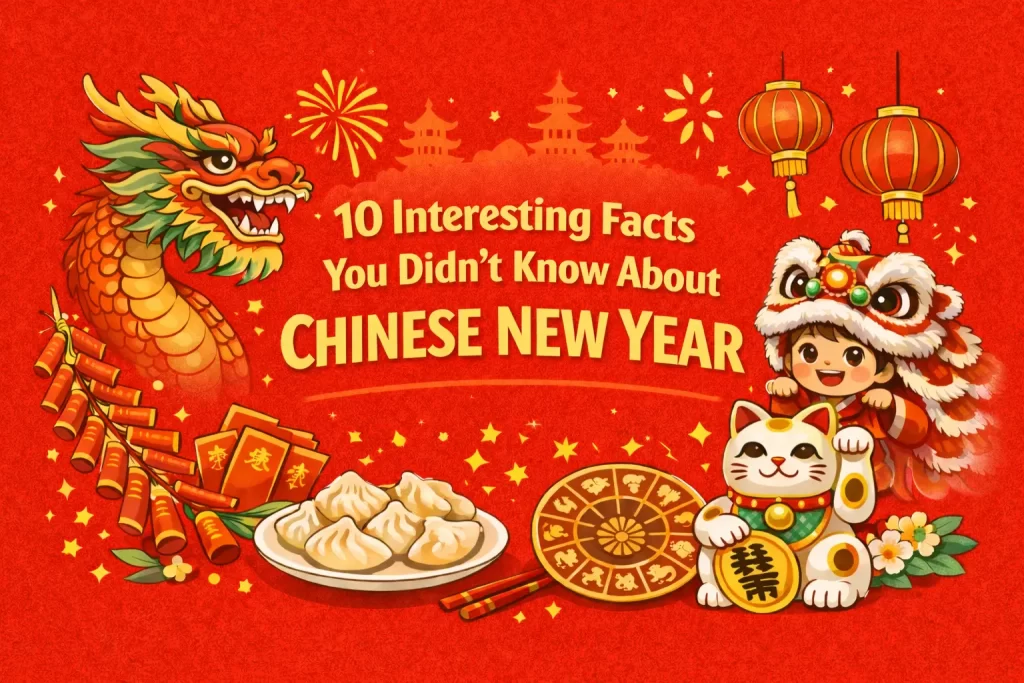
1. It is celebrated on a different date each year
The Chinese New Year, being based on the lunar calendar, is celebrated on a variable date each year. For example, this year’s Lunar New Year begins on February 17th. While celebrations and traditions take place annually, the exact date of the Lunar New Year changes each year because it begins with the arrival of the new moon, symbolizing the start of a new month. However, this date consistently falls on the second new moon after the December solstice, sometime between January 21st and February 20th each year.
2. Chinese New Year is also known as “Spring Festival”.

Celebrated around the world, especially in East Asia and China, the Lunar New Year is one of the most important holidays on the calendar. However, many know it as the Spring Festival (Chinese: Chunjie 春节). This is because it marks the beginning of spring and the end of winter in the traditional Chinese lunar-solar calendar. The 15-day festival symbolizes rebirth and awakening with the beginning of spring as we bid farewell to the past year. The Spring Festival also symbolizes good fortune, new opportunities, happiness, prosperity, and more.
3. It ends with the Lantern Festival
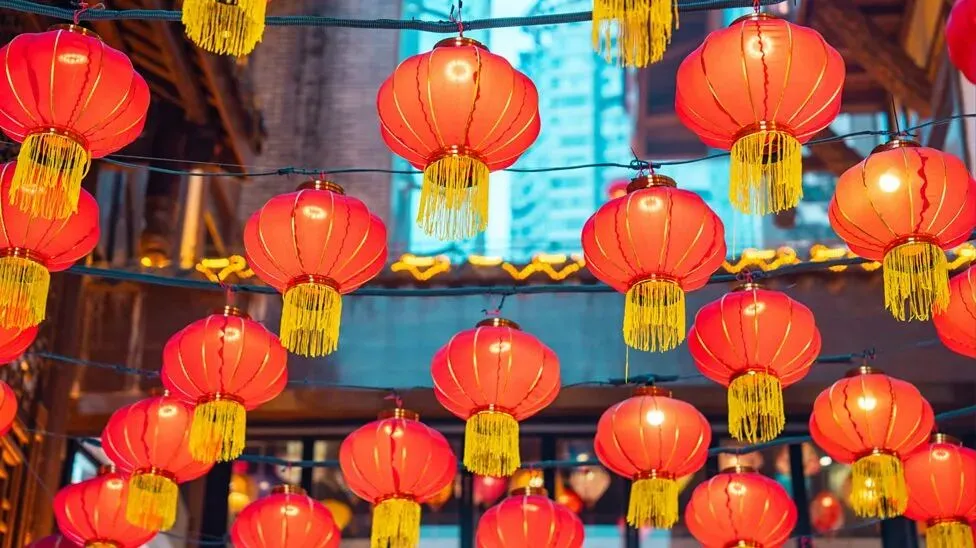
The Spring Festival marks the beginning of spring. However, it’s important to note a distinction between the Lantern Festival and the Spring Festival. The Lantern Festival, a traditional Chinese festival, marks the final day of the 15-day Spring Festival celebrations. Falling on the 15th day of the first month of the lunar calendar, this festival will coincide with March 3rd in 2026. Red lanterns, symbolizing the departure of the previous year and the arrival of the new one, not only decorate homes and streets for the celebrations, but it’s also a tradition for people to write riddles on the lanterns for others to solve.
4. Each year it is represented by one of the 12 animals

Considering that we Turks also use the 12-Animal Turkish Calendar, we can say that the association of years with animals is a very old tradition. In many cultures, the new year is also associated with a different animal in the zodiac. The Chinese Zodiac, also known as Sheng Xiao or Shu Xiang, assigns an animal to each year in a 12-year cycle, and these are Rat, Ox, Tiger, Rabbit, Dragon, Snake, Horse, Capricorn, Monkey, Rooster, Dog, and Pig. According to the traditional legend of the Great Race, a race is held in which 12 animals participate, and all animals are invited. However, as a prize, the 12 animals participating in the race are given a year from the zodiac, and the race is determined according to the order in which the animals win. In Chinese astrology, animals are thought to determine different personality traits, similar to the star signs of the zodiac, and the year 2026 is the year of the Fire Horse, symbolizing independence, ambition, energy, and more. However, the animals in the zodiac may differ slightly in other countries; For example, in Japan, the Pig in the zodiac is replaced by the Wild Boar, while in Thailand, the Dragon is replaced by a mythical creature known as the Naga.
5. The Red Envelope Tradition Hóngbāo (红包🧧)

Another tradition associated with the Spring Festival is the giving of red envelopes, known as Hóngbāo (红包), to younger family members or employees. These red envelopes, often given as gifts to young people or children, contain pocket money.
However, these red envelopes have a deeper meaning. Red envelopes symbolize good luck and represent auspiciousness. It is believed that the color red brings positivity and happiness, and also wards off evil spirits.
6. They have superstitions
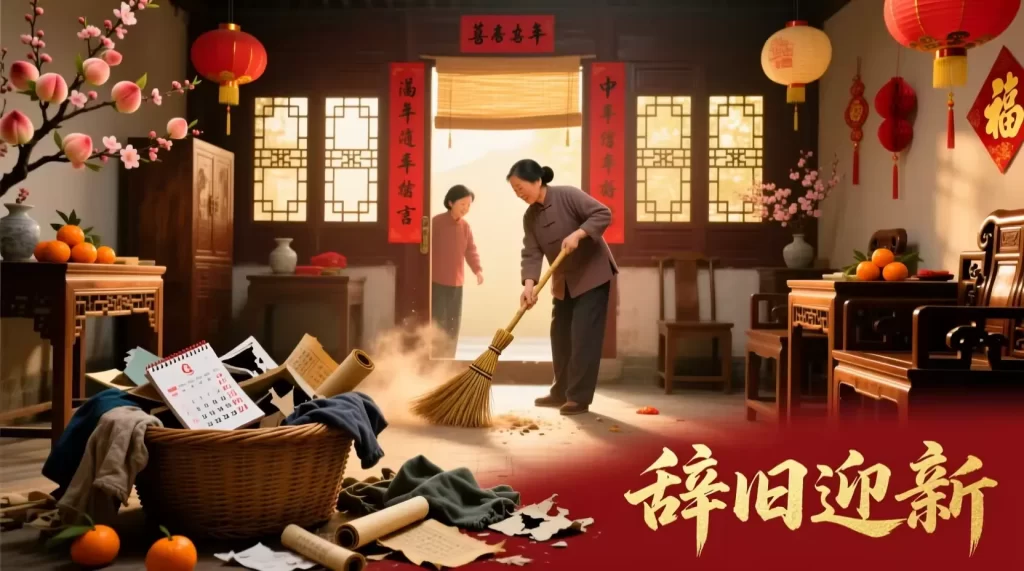
While Spring Festival is full of traditions, it also has a number of superstitions. These vary across different Asian cultures. One is that cleaning the house shouldn’t be done at the beginning of the holiday, as it’s believed to ward off any good luck or fortune that might come from the new moon cycle. Therefore, many people clean their homes before the celebrations, as many do so to remove any remaining misfortune or bad luck before the new year. Another is wearing red clothing to ward off evil spirits.
7. The tradition of fireworks and firecrackers

We have talked about the importance of wearing red during the Spring Festival. But why should we wear red? Firstly, in traditional Chinese culture, the color red originates from the legend of a monster named Nian. It’s said that the monster terrorized people every year, but was defeated because it was afraid of red, loud noises, and fire.
Therefore, fireworks and sparklers are a big part of the celebrations taking place all over the world.
8. Dragon and Lion Dances
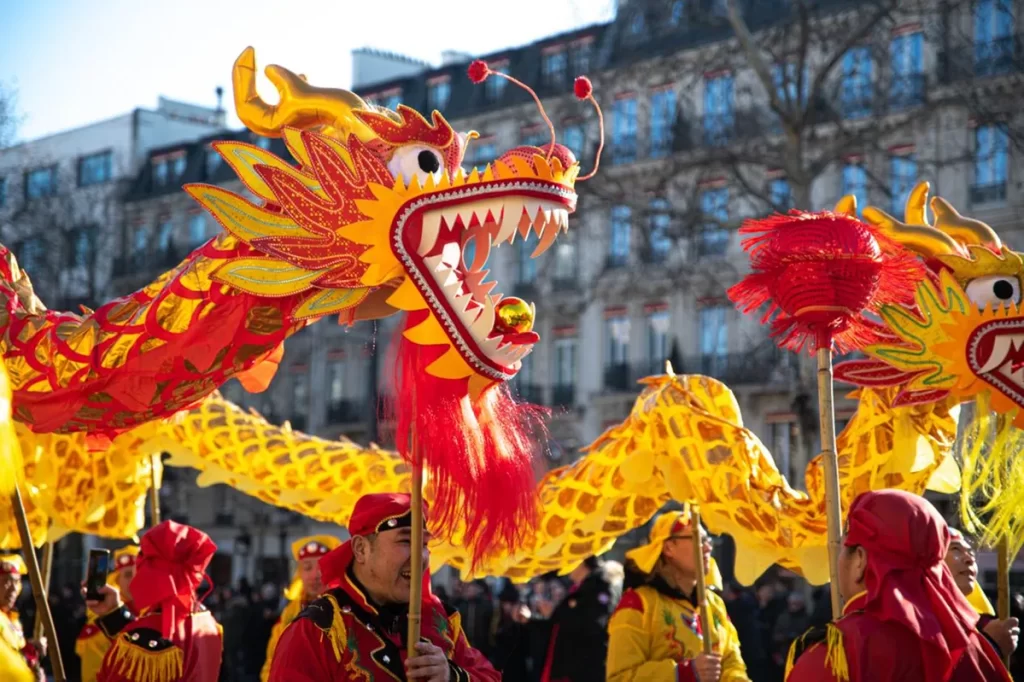
I’m sure you can picture dancing dragons and lions when you think of Chinese New Year celebrations. In the case of dragons, dancers use poles to propel a large, colorful dragon puppet through the crowd. Lions are usually portrayed by two performers who mimic the lion’s movements using its head and tail. The animals and the performances are believed to bring good luck. The mythical monster is frightened away with drums and gongs.
9. On New Year’s Eve, families gather to have a meal together
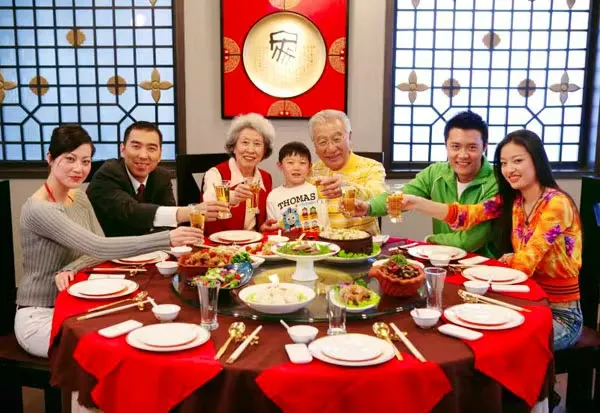
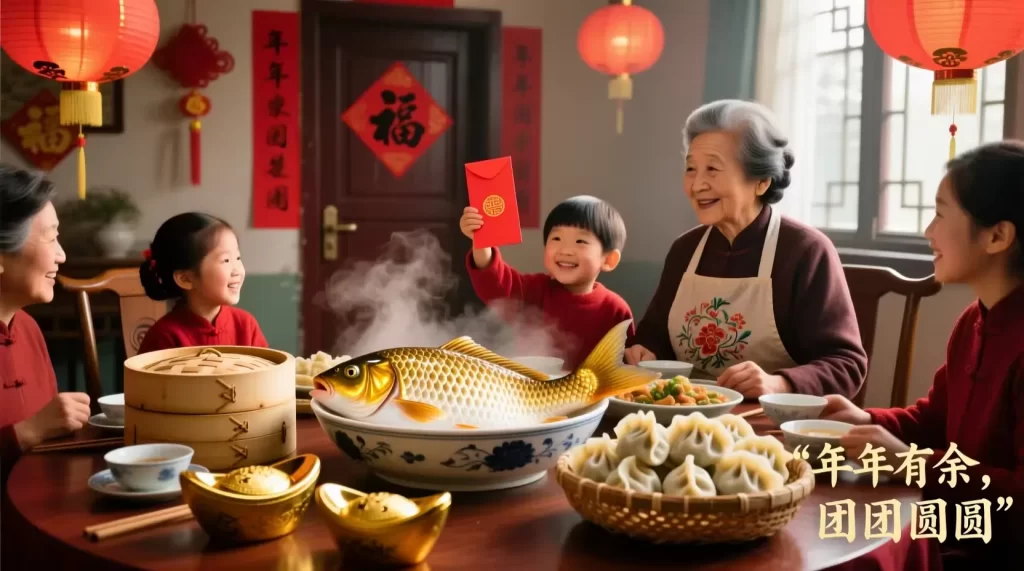
At the heart of the Spring Festival lies family and togetherness. Throughout the celebrations, families and loved ones come together, keeping traditions alive and sharing wishes for health and prosperity in the coming year. In Chinese culture, it is traditional to hold “family dinners” on New Year’s Eve. This allows families to feast together with auspicious meals and is a very important part of the Spring Festival.
10. Traditional dishes are served at the table on New Year’s Eve
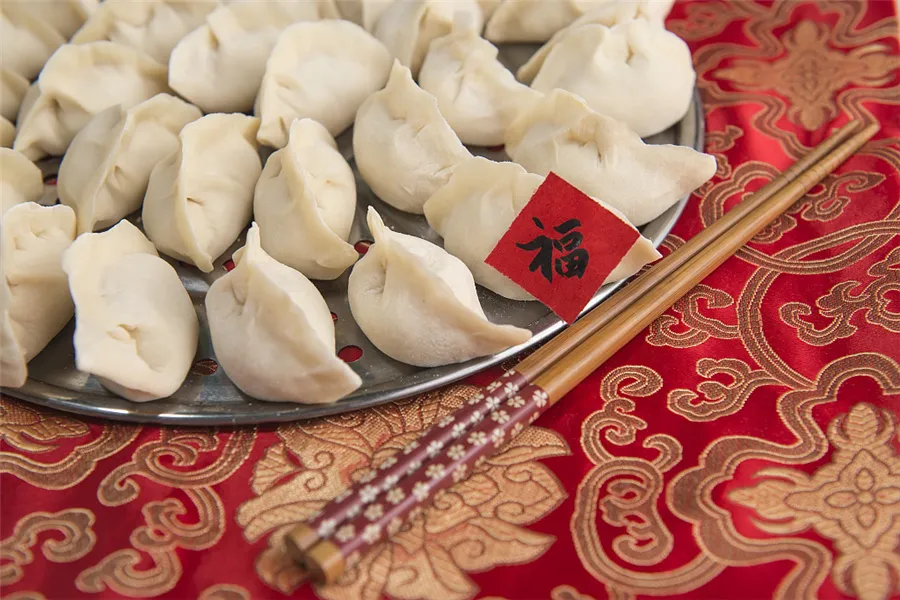
A large part of Asian culture is family and togetherness, and food is also important. In Chinese cuisine, different dishes represent different things. For example, fish represents good fortune for families, dumplings symbolize wealth, and sticky rice balls symbolize family unity. Each different society in Asia has different food traditions. For example, in Vietnam, salty sticky rice cakes are eaten, while in Malaysia, pineapple tarts symbolize wealth and prosperity.
About the Author